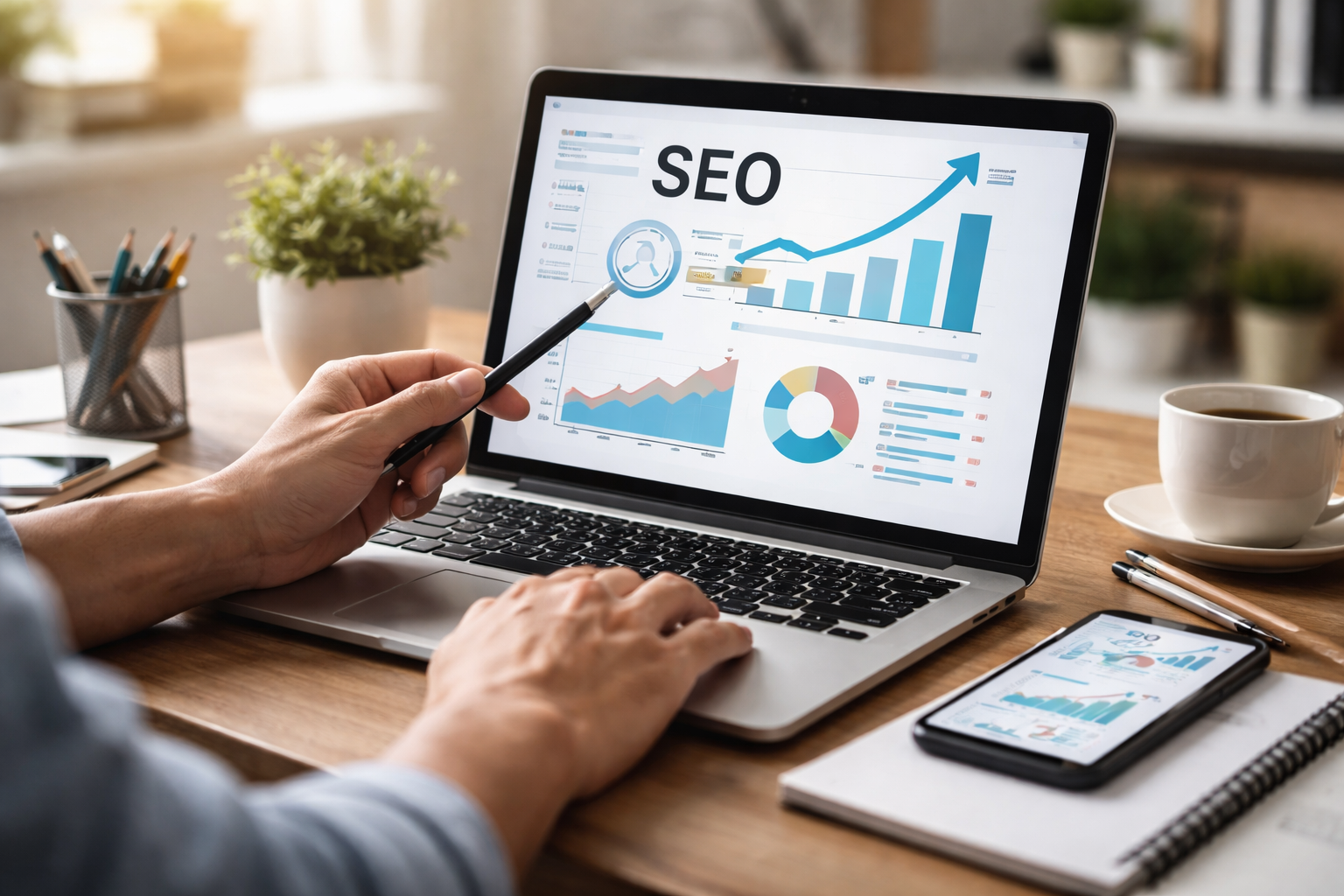
The digital landscape has transformed how businesses connect with their audience. In this increasingly competitive online arena, merely having a website is no longer sufficient. To truly thrive, businesses must ensure their online presence is not only discoverable but also attractive to their target market. This is where the profound power of Search Engine Optimization, or SEO, comes into play. SEO is the art and science of making your website more visible on search engines like Google, Bing, and Yahoo. By understanding and implementing effective SEO strategies, businesses can unlock significant growth, attract qualified leads, and ultimately dominate their niche.

At its core, SEO is about making your website understandable and valuable to search engines, and in doing so, it is relevant and useful to potential customers. Search engines are sophisticated algorithms designed to provide users with the most relevant results for their queries. They crawl the web, index pages, and then rank them based on a multitude of factors.
Contents
- 1 How Search Engines Work
- 2 Key Ranking Factors
- 3 Developing a Keyword Strategy
- 4 Creating High-Converting Content
- 5 Optimizing Your Website for Technical Excellence
- 6 Increased Organic Traffic and Lead Generation
- 7 Enhanced Brand Credibility and Trust
- 8 Improved Customer Acquisition Cost (CAC)
- 9 Deeper Customer Insights
- 10 Competitive Advantage
- 11 Keyword Research: The Foundation of Content Strategy
- 12 Crafting Content That Captivates and Converts
- 13 Key Performance Indicators (KPIs) for SEO
- 14 Utilizing SEO Analytics Tools
- 15 The Ever-Changing Search Engine Algorithms
- 16 The Competitiveness of Niche Markets
- 17 Dealing with Technical SEO Issues
- 18 The Long-Term Nature of SEO
- 19 The Rise of Artificial Intelligence and Machine Learning
- 20 Voice Search and Conversational AI
- 21 The Growing Importance of E-A-T (Expertise, Authoritativeness, Trustworthiness)
How Search Engines Work
Imagine search engines as vast libraries with billions of books (web pages). When you ask a question (enter a search query), the librarian (search engine algorithm) needs to quickly find the most relevant and authoritative books for you. To do this, they first have a team of “crawlers” (bots) that constantly explore the internet, following links from one page to another, much like a reader flipping through pages. These crawlers gather information about each page. This information is then organised and stored in a massive “index”, akin to the library’s catalogue. When a search query is entered, the search engine consults its index to find pages that match the keywords and concepts of the query. Finally, the “ranking algorithm” sorts these matching pages based on hundreds of factors to determine their order in the Search Engine Results Pages (SERPs).
Key Ranking Factors
While the exact algorithms are proprietary and constantly evolving, several key factors consistently influence search engine rankings. These can be broadly categorised into on-page, off-page, and technical SEO.
On-Page SEO
On-page SEO refers to the optimisation efforts made directly on your website. This includes the content you publish, how you structure it, and the keywords you strategically use.
Keyword Research and Implementation
Keywords are the words and phrases people type into search engines to find information. Effective keyword research involves identifying the terms your target audience is actually using. This goes beyond simply guessing; it requires using tools to understand search volume (how often a keyword is searched) and competition (how difficult it is to rank for that keyword). Once you have a solid list of relevant keywords, they need to be naturally integrated into your website’s content. This means using them in page titles, meta descriptions, headings, body text, and image alt tags. However, keyword stuffing, where keywords are unnaturally crammed into content, is detrimental and can lead to penalties. The goal is to create content that is informative and engaging for users while also signalling its relevance to search engines.
Content Quality and Relevance
High-quality, relevant content is the cornerstone of effective SEO. Search engines prioritise content that genuinely answers user questions, provides valuable insights, and is comprehensive. This means producing original articles, blog posts, product descriptions, and other materials that are well-researched, well-written, and engaging. Thin or duplicate content, on the other hand, offers little value and can harm your rankings. Think about what your ideal customer is looking for and create content that directly addresses those needs and interests.
User Experience (UX) and Site Structure
A positive user experience is increasingly important for SEO. Search engines want to send users to websites they will enjoy interacting with. This involves having a clean, intuitive website design, easy navigation, and fast loading speeds. A well-organised site structure, with clear hierarchies and internal linking, helps both users and search engine crawlers understand your website’s content and relationships between pages.
Off-Page SEO
Off-page SEO encompasses activities undertaken outside of your website to influence its rankings.
Link Building
Backlinks, which are links from other websites to yours, are often considered “votes of confidence” by search engines. The more high-quality, authoritative websites that link to your content, the more likely search engines are to view your site as credible and trustworthy. However, not all backlinks are created equal. Links from spammy or irrelevant sites can actually hurt your SEO. Effective link-building strategies focus on earning natural links through creating exceptional content, guest blogging on reputable sites, and engaging in public relations efforts.
Social Signals and Brand Mentions
While the direct impact of social media shares on rankings is debated, social signals can indirectly influence SEO. Strong social media presence can drive traffic to your website, increase brand awareness, and lead to more natural backlinks and mentions from other sites. When your brand is frequently mentioned online, even without a direct link, search engines can recognise your authority and relevance.
Technical SEO
Technical SEO ensures that your website is crawlable and indexable by search engines.
Site Speed and Mobile-Friendliness
In today’s mobile-first world, a fast-loading and mobile-responsive website is non-negotiable. Google prioritises mobile-friendly sites, and slow loading times lead to high bounce rates, signalling to search engines that users are not having a good experience. Optimising images, leveraging browser caching, and using a Content Delivery Network (CDN) can significantly improve site speed.
Schema Markup and Site Architecture
Schema markup is a type of code that you can add to your website to help search engines understand the context of your content. This can lead to “rich snippets” in search results, which can improve click-through rates. A well-defined site architecture, including logical URL structures and a sitemap, helps search engines navigate and index your website efficiently.
Understanding the fundamentals is just the first step. The real power lies in translating that understanding into tangible strategies that drive results.
Developing a Keyword Strategy
A robust keyword strategy is the bedrock of successful SEO. It involves a continuous process of identification, analysis, and refinement.
Identifying Your Target Audience’s Search Intent
Beyond simply finding popular keywords, it’s crucial to understand the “intent” behind those searches. Are users looking for information (informational intent), trying to buy something (commercial intent), or seeking to navigate to a specific website (navigational intent)? Tailoring your content to match this intent is paramount. For example, if a user searches for “best running shoes”, they likely have commercial intent and are looking for product recommendations or comparisons, not just a definition of running shoes.
Analyzing Keyword Metrics
Once you’ve identified potential keywords, delve into their metrics. Tools like Google Keyword Planner, Ahrefs, and SEMrush provide valuable data on search volume, keyword difficulty, and related keywords. Look for keywords that strike a balance between sufficient search volume and achievable competition. Long-tail keywords (longer, more specific phrases) often have lower search volume but can attract highly qualified leads with a clearer buying intent.
Mapping Keywords to Content
The final step in strategy development is mapping your identified keywords to specific pages on your website. Each page should ideally target a primary keyword and a few closely related secondary keywords. This ensures that your content is not only relevant but also strategically optimised for discoverability.
Creating High-Converting Content
Content is the vehicle through which SEO efforts manifest into tangible results. Creating content that not only ranks but also persuades is the ultimate goal.
Understanding Search Intent and User Needs
As mentioned earlier, aligning your content with user intent is critical. If your keyword research reveals informational intent, your content should provide comprehensive answers, guides, or tutorials. If commercial intent is identified, focus on product reviews, comparisons, or landing pages designed to convert. Always put yourself in the shoes of your target audience and consider what information they would find most valuable and persuasive.
Crafting Compelling Headlines and Meta Descriptions
Your headline and meta description are your first impression in the SERPs. They need to be attention-grabbing, accurately reflect your content, and entice users to click. Use your primary keywords in your headlines and craft meta descriptions that highlight the benefits of clicking through. Think of them as mini-advertisements for your content.
Incorporating Visuals and Multimedia
Text-heavy content can be daunting. Break up your content with relevant images, infographics, videos, and other multimedia elements. This not only makes your content more engaging and accessible but can also improve dwell time and reduce bounce rates, all of which are positive signals for SEO.
Optimizing Your Website for Technical Excellence
A technically sound website is the foundation upon which all other SEO efforts are built. Neglecting technical aspects can render even the best content invisible.
Ensuring Mobile Responsiveness and Page Speed
In an era where most searches originate from mobile devices, a mobile-first approach is essential. Your website must adapt seamlessly to all screen sizes, providing a consistent and positive user experience. Similarly, page speed is a critical factor. Users expect websites to load almost instantaneously. Slow websites frustrate visitors and lead to higher bounce rates, negatively impacting your search engine rankings.
Implementing Schema Markup and Structured Data
Schema markup is a powerful tool that helps search engines understand the context of your web pages more deeply. By using schema, you can enable rich snippets in search results, such as star ratings, event details, or product pricing, which can significantly improve click-through rates and visibility.
A logical and intuitive site structure is vital for both users and search engine crawlers. Ensure that your website has a clear hierarchy, with well-organised categories and subcategories. Internal linking, where you link relevant pages within your own website, helps distribute “link equity” and guides users and crawlers through your site.
The benefits of a well-executed SEO strategy extend far beyond simply achieving higher search engine rankings. It translates directly into tangible business growth.
Increased Organic Traffic and Lead Generation
One of the most direct impacts of SEO is the surge in organic traffic to your website. When you rank higher for relevant keywords, you attract more users who are actively searching for your products or services. This organic traffic is often highly qualified, meaning these visitors are more likely to be genuinely interested in what you offer, leading to a higher conversion rate and more lead generation.
Enhanced Brand Credibility and Trust
Appearing at the top of search results signals authority and trustworthiness to consumers. Users tend to trust websites that are readily found on search engines, perceiving them as established and reliable. This enhanced credibility can translate into stronger brand recognition and a more positive perception among your target audience.
Improved Customer Acquisition Cost (CAC)
Compared to many paid advertising channels, SEO generally offers a lower customer acquisition cost over the long term. While SEO requires an initial investment of time and resources, the steady stream of organic leads it generates can be more cost-effective than continually paying for clicks or impressions. Once you achieve good rankings, they can provide a sustainable source of customers without ongoing ad spending.
Deeper Customer Insights
The process of SEO, particularly keyword research and analytics, provides invaluable insights into your customers’ behaviour, preferences, and pain points. By understanding what they are searching for, what questions they are asking, and how they interact with your website, you can refine your products, services, and marketing messages to better meet their needs. This data-driven approach to understanding your customers is crucial for sustained business growth.
Competitive Advantage
In today’s crowded marketplace, a strong SEO presence can be a significant differentiator. Businesses that invest in and excel at SEO are often able to capture market share from competitors who have a less robust online presence. By consistently outranking rivals for crucial keywords, you effectively position your business as the go-to solution for potential customers.
Keywords and content are inextricably linked in the pursuit of SEO success. They work in tandem to attract both search engines and users.
Keyword Research: The Foundation of Content Strategy
As previously emphasised, meticulous keyword research is the bedrock upon which your entire content strategy should be built. It’s not a one-time task but an ongoing process of discovery and refinement.
Identifying Long-Tail Keywords and Their Value
While popular, broad keywords are tempting; focusing on longer, more specific phrases, known as long-tail keywords, can be exceptionally effective. These keywords typically have lower search volume but are indicative of higher user intent. For example, instead of targeting “shoes”, aiming for “waterproof trail running shoes for women with wide feet” will likely attract a much more targeted and motivated audience. This precision in targeting leads to higher conversion rates.
Understanding Keyword Clusters and Semantic Search
Search engines are becoming increasingly adept at understanding the context and meaning of search queries, a concept known as semantic search. This means that simply stuffing a single keyword into your content is no longer sufficient. Instead, you should aim to create content that covers a topic comprehensively, naturally incorporating related keywords and concepts that form a “keyword cluster”. By addressing the broader topic, your content becomes more relevant to a wider range of related searches.
Crafting Content That Captivates and Converts
Once you’ve identified your target keywords, the next crucial step is to create content that effectively incorporates them while also engaging and persuading your audience.
Writing for Both Users and Search Engines
The golden rule of content creation for SEO is to write for your audience first and then consider the search engines. Your content must be informative, engaging, and solve a problem for your readers. Once you have a compelling piece of content, strategically weave in your target keywords naturally. Avoid keyword stuffing, which is detrimental to both user experience and SEO.
The Importance of Content Depth and Authority
Search engines favour content that is comprehensive and authoritative. This means going beyond superficial information and providing in-depth analysis, expert insights, and supporting data. The longer and more detailed your content, provided it remains relevant and valuable, the more likely it is to be perceived as an authority on the subject matter, leading to higher rankings.
Utilizing Internal and External Linking Strategically
Internal linking, connecting relevant pages within your own website, is crucial for distributing link equity and helping users navigate your site. External linking, on the other hand, involves linking to reputable and authoritative external resources. This not only provides additional value to your readers but can also signal to search engines that your content is well-researched and credible.
The adage “what gets measured, gets managed” is particularly true for SEO. Without consistent analysis, it’s impossible to know what’s working and what isn’t.
Key Performance Indicators (KPIs) for SEO
To effectively gauge your SEO efforts, it’s imperative to track a variety of key performance indicators that paint a comprehensive picture of your website’s performance.
Organic Traffic and Session Duration
Organic traffic is a fundamental metric, indicating the number of visitors arriving at your site from search engines. Beyond just the volume, you must also consider session duration. A longer session duration suggests that visitors are finding your content engaging and valuable, which is a positive signal to search engines.
Keyword Rankings and Click-Through Rates (CTRs)
Tracking your keyword rankings allows you to see how your site is performing for the terms you are targeting. However, rankings alone aren’t the whole story. Equally important is the click-through rate (CTR) from the search engine results pages. A high ranking with a low CTR might indicate that your title tags or meta descriptions are not compelling enough to entice users to click.
Conversion Rates and Return on Investment (ROI)
Ultimately, SEO should contribute to your business goals. For most businesses, this means driving conversions, whether that’s a sale, a lead form submission, or a newsletter signup. Tracking conversion rates from organic traffic helps you understand the real business impact of your SEO efforts and calculate your return on investment.
Utilizing SEO Analytics Tools
Harnessing the power of data requires the right tools. Fortunately, a robust ecosystem of SEO analytics tools is available to help you monitor and understand your performance.
Google Analytics
Google Analytics is an indispensable tool for any website owner. It provides detailed insights into website traffic, user behaviour, conversion tracking, and much more. By setting up goals and tracking specific events, you can gain a granular understanding of how organic visitors interact with your site and contribute to your business objectives.
Google Search Console
Google Search Console is another vital, free tool from Google that offers direct insights into how Google views your website. It reports on search queries driving traffic, notifies you of any indexing issues, highlights crawl errors, and provides data on your site’s performance in Google Search. This tool is essential for identifying and resolving technical SEO problems.
Third-Party SEO Tools
Beyond the free Google tools, a plethora of paid third-party SEO platforms like Ahrefs, SEMrush, and Moz offer advanced features for keyword research, competitor analysis, backlink tracking, site audits, and rank tracking. These tools provide a more comprehensive and often more user-friendly interface for managing and optimising your SEO strategy.
The path to SEO success is rarely without its obstacles. Recognising and proactively addressing common challenges is crucial for sustained progress.
The Ever-Changing Search Engine Algorithms
Search engines like Google are constantly updating their algorithms to improve the quality of search results. This can sometimes lead to unexpected shifts in rankings.
Staying Updated with Algorithm Changes
The best approach is to stay informed about major algorithm updates. Follow reputable SEO blogs and industry news outlets. However, rather than chasing every minor algorithm tweak, focus on fundamental SEO best practices that are likely to remain relevant. Prioritise creating high-quality content and delivering an excellent user experience, as these are consistently favoured by search engines.
Adapting to New Ranking Factors
As search engines evolve, so do the factors that influence rankings. For instance, user experience and mobile-friendliness have become increasingly important in recent years. Be prepared to adapt your strategies as new ranking signals emerge, and ensure your website is aligned with the latest search engine priorities.
The Competitiveness of Niche Markets
In highly competitive industries, achieving top search engine rankings can be incredibly challenging due to the sheer volume of competitors vying for the same keywords.
Differentiating Your Content and Unique Selling Proposition (USP)
To stand out in a crowded market, your content needs to be exceptional. Differentiate yourself by offering unique insights, a fresh perspective, or a deeper level of detail than your competitors. Clearly articulate your unique selling proposition and ensure it is reflected in your content and website messaging.
Focusing on Niche Long-Tail Keywords
As discussed earlier, targeting niche long-tail keywords can be a highly effective strategy in competitive markets. These more specific phrases often have less competition and attract highly qualified leads who are further down the buying funnel.
Dealing with Technical SEO Issues
Technical issues, such as slow loading speeds, broken links, or crawl errors, can significantly hinder your SEO performance.
Conducting Regular Website Audits
Proactive identification of technical issues is key. Conduct regular website audits using tools like Google Search Console and specialised SEO audit software. These audits can help uncover problems with site speed, mobile responsiveness, broken links, duplicate content, and other technical aspects that could be negatively impacting your rankings.
Prioritizing User Experience Over Technicalities
While technical SEO is important, always remember that it serves the ultimate goal of improving user experience. Ensure that any technical optimisations you implement enhance, rather than detract from, how users interact with your website.
The Long-Term Nature of SEO
SEO is not a quick fix; it’s a long-term strategy that requires patience and consistent effort.
Setting Realistic Expectations and Timelines
It’s important to set realistic expectations regarding the timeline for seeing significant SEO results. It can take months, and sometimes even a year or more, to build authority and achieve top rankings for more challenging keywords. Focus on consistent progress and celebrate incremental wins.
Maintaining Momentum with Ongoing Optimization
SEO is an ongoing process, not a project with a defined end date. Continuously monitor your performance, identify new opportunities, update content, and adapt to algorithm changes to maintain your momentum and stay ahead of the competition.
The SEO landscape is in a constant state of flux, shaped by technological advancements and evolving user behaviour. Understanding these future trends is critical for businesses to remain agile and competitive.
The Rise of Artificial Intelligence and Machine Learning
AI is already playing a significant role in how search engines understand and rank content. This trend is only expected to accelerate.
AI-Powered Content Creation and Optimization
Tools powered by AI are becoming increasingly sophisticated, assisting with content generation, keyword research, and even predicting user intent. While AI can be a powerful tool for efficiency, human oversight and creativity remain crucial for producing authentic, high-quality content that resonates with audiences. The future will likely see a hybrid approach, with AI assisting human content creators.
Personalization and Predictive Search
AI enables search engines to deliver more personalised search results based on a user’s past behaviour, location, and preferences. This means that businesses will need to focus on creating content that appeals to specific audience segments and anticipating user needs before they are even explicitly searched.
Voice Search and Conversational AI
The proliferation of smart speakers and voice assistants has ushered in the era of voice search, which operates differently than traditional text-based search.
Optimizing for Natural Language Queries
Voice searches are typically longer and more conversational than typed queries. Businesses need to optimise their content for natural language, answering questions in a conversational tone and using longer, keyword-rich phrases that mimic how people actually speak. This shift requires a deeper understanding of user intent and the ability to provide direct, concise answers to common questions.
The Importance of Local SEO and Featured Snippets
Voice search often drives local business queries, making local SEO even more critical. Furthermore, voice assistants often pull answers from featured snippets. Therefore, optimising your content to appear in featured snippets is essential for capturing voice search traffic.
The Growing Importance of E-A-T (Expertise, Authoritativeness, Trustworthiness)
Google’s emphasis on E-A-T has become increasingly prominent, particularly for websites dealing with sensitive topics like health and finance (Your Money or Your Life—YMYL topics).
Building Authoritative Content and Establishing Credibility
Businesses need to actively demonstrate their expertise, authority, and trustworthiness. This involves creating high-quality, well-researched content, showcasing author credentials, and building a strong online reputation through positive reviews and mentions. Demonstrating subject matter expertise is no longer optional; it’s a fundamental requirement for ranking well.
The Role of User Experience and Site Security
User experience and site security (e.g., HTTPS) are integral to establishing trust. A secure, user-friendly website signals to both users and search engines that you are a legitimate and reliable entity. Prioritising a positive user journey and robust security measures will be paramount.
In conclusion, the power of SEO is undeniable for any business aiming to succeed in the digital age. By understanding its fundamental principles, implementing effective strategies, and continuously adapting to its evolving landscape, businesses can harness SEO’s potential to drive significant growth, build lasting credibility, and forge deeper connections with their target audience in the years to come.

The Virelvo Editorial Team specializes in creating beginner-friendly digital marketing content designed to help individuals and small businesses grow online.