In the ever-evolving landscape of digital marketing, achieving high search engine rankings is paramount for online visibility and business growth. While on-page SEO focuses on optimizing elements within your website, off-page SEO works on building your website’s authority and relevance through external signals. It’s the silent force that propels your site to the top of search results, signaling to search engines that your content is valuable, trustworthy, and deserving of a prominent position. Understanding and effectively implementing off-page SEO strategies is no longer optional; it is a fundamental requirement for any aspiring online success story.
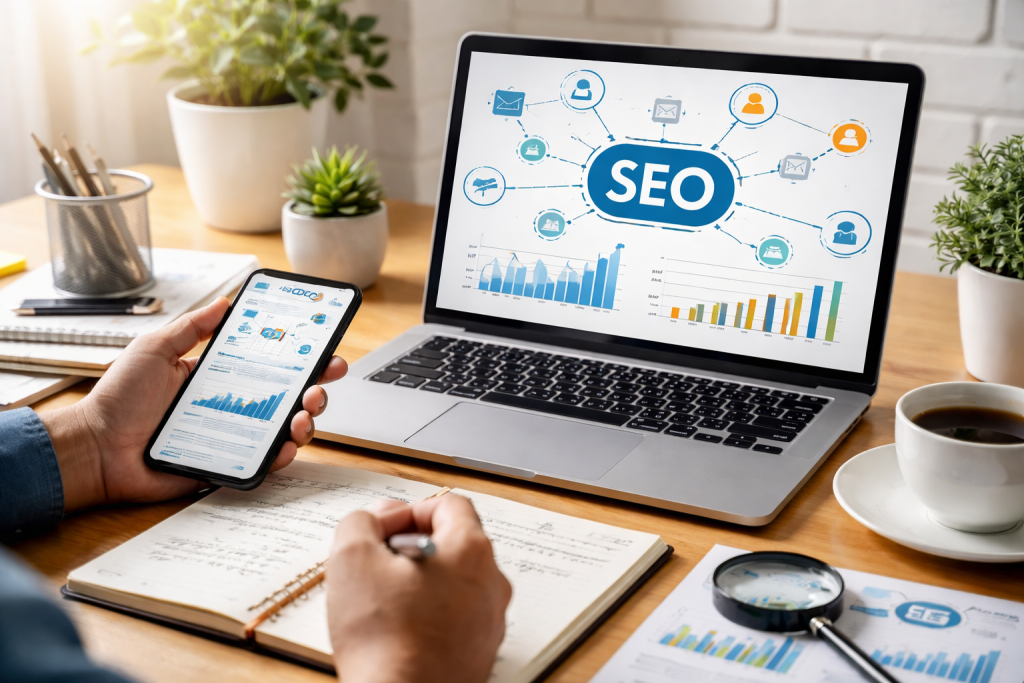
Off-page SEO encompasses all activities performed outside of your website’s confines to improve its search engine ranking. Unlike on-page SEO, which deals with elements like keywords, content quality, and site structure, off-page SEO is about external perceptions and endorsements your website receives. Think of it as a popularity contest where search engines are the judges, and positive external signals are the votes. The more high-quality votes your website accumulates from reputable sources, the more authoritative and trustworthy it becomes in the eyes of search engines like Google. This external validation is crucial because it indicates that other websites and individuals find your content valuable enough to link to, share, or mention. Ignoring off-page SEO is akin to having a beautifully designed store in a hidden alleyway—nobody knows it exists, regardless of how good the products are.
Contents
- 1 The Core Principle of Off-Page Optimization
- 2 Differentiating Off-Page from On-Page SEO
- 3 Boosting Search Engine Rankings
- 4 Building Domain Authority and Trust
- 5 Driving Referral Traffic
- 6 Understanding Backlink Quality
- 7 Strategies for Acquiring High-Quality Backlinks
- 8 Social Signals and Their Indirect Impact
- 9 Driving Brand Mentions and Engagement
- 10 Content Amplification through Social Channels
- 11 Finding Reputable Guest Blogging Opportunities
- 12 Crafting High-Quality Guest Posts
- 13 Optimizing Your Author Bio and Link Placement
- 14 Identifying Relevant Influencers
- 15 Collaborating for Content and Outreach
- 16 Garnering Brand Mentions and Links from Influencer Collisions
- 17 Key Metrics for Tracking Off-Page Performance
- 18 Tools for Off-Page SEO Measurement
The Core Principle of Off-Page Optimization
At its heart, off-page SEO is built on the principle of demonstrating credibility and authority. Search engines are constantly striving to deliver the most relevant and highest-quality results to their users. When other reputable websites link to your content, it acts as a strong signal of endorsement. This endorsement tells search engines that your content is likely valuable and trustworthy, making it more probable that it will rank higher for relevant search queries. It’s about earning referrals and building a positive reputation across the web, which in turn boosts your website’s standing within search engine algorithms.
Differentiating Off-Page from On-Page SEO
While both are integral to a holistic SEO strategy, their focus areas are distinct. On-page SEO is about optimizing what you can control directly on your website—keywords in content, meta descriptions, image alt tags, site speed, and mobile responsiveness. Off-page SEO, conversely, is about influencing factors outside of your website—backlinks, social media signals, brand mentions, and online reviews. Both are essential, and a robust SEO strategy harmonizes these two components to create a powerful and enduring online presence.
One cannot overstate the significance of off-page SEO. It acts as a powerful amplifier for all your on-page efforts, providing the necessary external validation that search engines crave. Without a strong off-page strategy, even the most perfectly optimized website might struggle to gain traction in competitive search landscapes.
Boosting Search Engine Rankings
Improving search engine rankings is the most immediate and obvious benefit of effective off-page SEO. Backlinks from authoritative sites are particularly potent signals that tell search engines your content is valuable and relevant. As your website accumulates more of these high-quality links, its domain authority (DA) and page authority (PA) increase, leading to higher positions in search results. This process isn’t just about showing up; it’s about showing up prominently when people are actively searching for what you offer.
Building Domain Authority and Trust
Off-page SEO is a key driver for building domain authority. Domain authority is a search engine ranking score that predicts how well a website will rank on search engine results. The more high-quality backlinks and positive external signals a website receives, the higher its domain authority. This, in turn, translates into greater trust from search engines, making your website a more credible source of information. This trust is invaluable as it influences how all your content is perceived and ranked.
Driving Referral Traffic
Beyond direct SEO benefits, a strong off-page strategy can also drive substantial referral traffic to your website. When other websites link to your content, their visitors might click on those links and land on your site. This is highly valuable traffic, as it often comes from an already engaged audience interested in related topics, potentially leading to higher conversion rates and greater engagement with your content.
Backlinks remain the cornerstone of off-page SEO. However, not all backlinks are created equal. The emphasis should always be on acquiring high-quality backlinks from relevant and authoritative websites. A few high-quality links are infinitely more valuable than hundreds of low-quality, spammy links that could actually harm your SEO.
Understanding Backlink Quality
The quality of a backlink is determined by several factors. Firstly, the authority of the linking domain is crucial. A link from a well-respected industry leader or a major news outlet carries far more weight than a link from a freshly created, low-authority blog. Secondly, relevance plays a vital role. A backlink from a website in a similar niche to yours is more valuable than one from an unrelated industry. Thirdly, the anchor text used for the backlink matters. It should be natural and descriptive, providing context to both users and search engines about the linked content.
Strategies for Acquiring High-Quality Backlinks
Building quality backlinks requires a strategic and often proactive approach.
One common strategy is content marketing. Creating exceptional, shareable content naturally attracts backlinks. When you produce resources, guides, or original research that genuinely adds value to your industry, other websites are more likely to reference and link to it. This “link bait” content is a powerful, organic way to earn endorsements.
Another effective technique is broken link building. This involves finding broken links on other websites and suggesting your relevant content as a replacement. It’s a win-win scenario, as you help the website owner fix a broken link while gaining a valuable backlink.
Guest posting on reputable industry blogs is another time-tested method. By contributing high-quality content to another website, you not only gain exposure to a new audience but also secure a valuable backlink to your own site, often within the author bio.
While social media signals might not directly influence search rankings in the same way as backlinks, their indirect impact on off-page SEO is undeniable. Social media platforms are powerful tools for content amplification, brand building, and establishing authority.
Social Signals and Their Indirect Impact
Search engines, particularly Google, have repeatedly stated that social shares and likes are not direct ranking factors. However, social media platforms contribute to off-page SEO in several crucial indirect ways. Firstly, increased visibility on social media means your content is seen by a wider audience, increasing the likelihood of earning backlinks and mentions. When your content goes viral or is widely shared, it naturally attracts the attention of journalists, bloggers, and influencers, who may then link to it.
Driving Brand Mentions and Engagement
Social media is excellent for driving brand mentions, even without explicit backlinks. When your brand is frequently discussed, quoted, or referenced on social platforms, it signals to search engines that your brand is relevant and prominent within its industry. This “buzz” around your brand can contribute to a stronger online presence and indirectly improve your search rankings. Furthermore, engaged audiences on social media are more likely to seek out your website and spend time there, sending positive user signals to search engines.
Content Amplification through Social Channels
Social media serves as a vital platform for content amplification. By actively sharing your blog posts, articles, and other valuable content across relevant social channels, you maximize their reach. The more eyes on your content, the greater the chances of it being discovered, enjoyed, and ultimately, linked to by other authoritative sources. This amplification loop is a fundamental aspect of a successful off-page SEO strategy.
Guest blogging remains a highly effective off-page SEO technique when executed strategically and with a focus on quality. It allows you to showcase your expertise, reach new audiences, and, most importantly, secure valuable backlinks from relevant and authoritative websites.
Finding Reputable Guest Blogging Opportunities
The key to successful guest blogging for off-page SEO lies in identifying reputable and relevant websites in your niche. Look for blogs that have a strong domain authority, an engaged audience, and a history of publishing high-quality content related to your field. Tools like Ahrefs or Moz can help you analyze a website’s domain authority and traffic to ensure you’re targeting valuable opportunities. Avoid blogs with low authority or those that appear to be link farms, as these could potentially harm your SEO rather than help it.
Crafting High-Quality Guest Posts
When you secure a guest blogging opportunity, the focus must be on delivering truly exceptional content. A guest post should be just as carefully crafted and informative as any article on your own website. It should provide genuine value to the host blog’s audience, addressing their pain points or offering unique insights. This dedication to quality not only impresses the host but also solidifies your reputation as an industry expert, making your backlink more impactful. Always adhere to the host blog’s guidelines, including word count, formatting, and linking policies.
Optimizing Your Author Bio and Link Placement
The author bio is often where you can place your backlink to your website. Make sure the anchor text is natural and relevant, pointing to a valuable page on your site, such as your homepage, a specific service page, or a relevant resource. While some host blogs may allow contextual links within the body of the article, these should be used sparingly and only when they genuinely add value to the content for the reader. The goal is to earn a natural, editorially given link rather than overtly stuffing links.
Influencer marketing has emerged as a powerful off-page SEO strategy, particularly in niches where visual content and personal recommendations hold significant sway. Collaborating with relevant influencers can amplify your brand’s reach, drive traffic, and generate valuable mentions and backlinks.
Identifying Relevant Influencers
The success of influencer marketing for off-page SEO hinges on identifying the right influencers. This means looking beyond follower counts and focusing on engagement rates, audience demographics, and alignment with your brand values and niche. An influencer with a smaller, highly engaged, and relevant audience can be far more effective than a mega-influencer whose audience may be too broad or disconnected from your offerings. Use tools designed for influencer discovery or manually research thought leaders in your industry across platforms like Instagram, YouTube, TikTok, and industry-specific blogs.
Collaborating for Content and Outreach
Once you’ve identified suitable influencers, creative collaboration is key. This could involve sponsored content where the influencer features your product or service, guest appearances on their podcasts or videos, or co-creating unique content that benefits both parties. The objective is to naturally integrate your brand into their content in a way that resonates with their audience. When influencers genuinely appreciate and promote your content or product, it often leads to organic mentions, shares, and even direct backlinks to your website, contributing significantly to your off-page SEO efforts.
Garnering Brand Mentions and Links from Influencer Collisions
The indirect benefits of influencer marketing for off-page SEO are substantial. Beyond direct sponsored posts, the buzz generated by influencer collaborations can lead to organic brand mentions across various online platforms. Other blogs and news sites might pick up on the influencer’s promotion, leading to earned media coverage and spontaneous backlinks. These “influencer collisions” create a ripple effect, spreading your brand’s presence across the web and providing valuable, unsolicited endorsements that greatly boost your off-page signals.
Implementing off-page SEO strategies is only half the battle; the other half is accurately measuring their impact. Without proper measurement, it’s impossible to determine which efforts are yielding results and which need adjustment.
Key Metrics for Tracking Off-Page Performance
Several key metrics can help you assess the effectiveness of your off-page SEO efforts.
Backlink Profile Analysis is fundamental. Track the number of new backlinks acquired, the domain authority of linking sites, and the relevance of those links. Tools like Ahrefs, Moz, and SEMrush provide comprehensive backlink analysis, allowing you to monitor your link velocity and the quality of your incoming links. Pay attention to the anchor text distribution and ensure your backlink profile appears natural and diverse.
Organic Search Traffic is a direct indicator of improved search rankings. As your off-page SEO improves your website’s authority, you should see an increase in organic traffic to pages optimized for specific keywords. Monitor Google Analytics to track changes in traffic sources and keyword performance.
Keyword Rankings are a more granular metric. Track your position for target keywords. While organic search traffic shows overall improvement, ranking for specific high-value keywords demonstrates the direct impact of your SEO efforts on individual search terms.
Brand Mentions are another important signal. Use social listening tools and Google Alerts to monitor mentions of your brand across social media, forums, and news sites. While not all mentions will be linked, they still contribute to brand visibility and authority, which influences search engine perception.
Tools for Off-Page SEO Measurement
A suite of tools is indispensable for effective off-page SEO measurement. Google Search Console is a free and essential tool for monitoring your website’s backlink profile and identifying any potential issues. It provides data on who is linking to your site and helps you disavow problematic links.
Google Analytics is crucial for tracking organic traffic, referral traffic from backlinks, user engagement metrics, and conversion rates. By segmenting your traffic, you can see which off-page efforts are driving the most valuable visitors.
Premium SEO tools like Ahrefs, Moz, and SEMrush offer advanced features for backlink analysis, competitor research, keyword tracking, and domain authority monitoring. These tools provide in-depth insights into your off-page performance and help you identify new opportunities. Regularly reviewing these metrics and adapting your off-page strategy based on the data is crucial for continuous improvement and sustained online success.

The Virelvo Editorial Team specializes in creating beginner-friendly digital marketing content designed to help individuals and small businesses grow online.