In the dynamic landscape of modern business, attracting, engaging, and converting customers online requires a strategic approach. At the heart of this strategy lies the digital marketing funnel, a conceptual framework that maps out the customer journey from initial awareness to loyal advocacy. Understanding and optimizing this funnel is paramount for any business aiming to thrive in the digital age. This comprehensive guide will demystify the digital marketing funnel, break down its stages, offer actionable strategies, and equip you with the knowledge to build a robust and lucrative online presence.
Contents
- 1 What is a Digital Marketing Funnel?
- 2 The Stages of the Digital Marketing Funnel
- 3 Creating a Successful Digital Marketing Funnel Strategy
- 4 Tools and Techniques for Optimizing Your Digital Marketing Funnel
- 5 Measuring Success: Key Metrics for Evaluating Your Digital Marketing Funnel
- 6 Common Mistakes to Avoid in Digital Marketing Funnel Implementation
- 7 The Future of Digital Marketing Funnels: Emerging Trends and Innovations
What is a Digital Marketing Funnel?
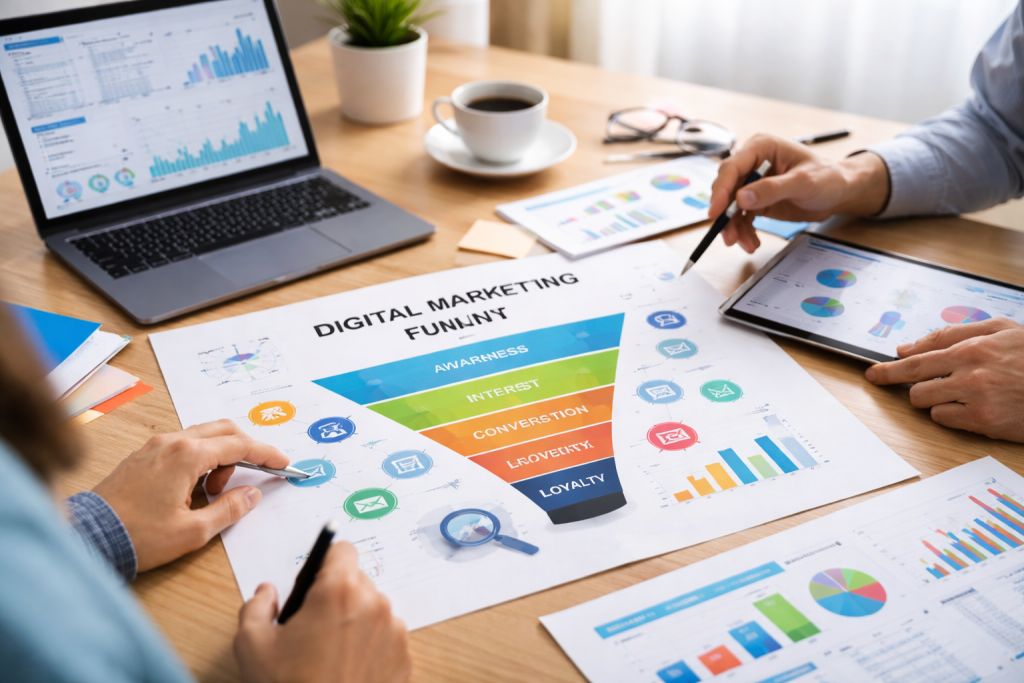
At its core, a digital marketing funnel is a visual representation of the path a potential customer takes from their first interaction with your brand to becoming a paying customer and, often, a repeat buyer. It’s called a “funnel” because, much like a physical funnel, it starts broad at the top with a large audience and narrows down as prospects move through the stages, with fewer individuals reaching the bottom. This narrowing reflects the natural attrition that occurs as individuals become more qualified and committed to a purchase. It’s not just about sales; it’s about building relationships and guiding prospects through a thoughtfully designed experience.
The Stages of the Digital Marketing Funnel
A well-constructed digital marketing funnel typically comprises several distinct stages, each with its objectives and associated marketing activities. While specific terminology may vary, the fundamental progression remains consistent.
Awareness: Casting a Wide Net
This is the funnel’s top, where the goal is to introduce your brand, products, or services to a wide audience who may not yet know they need what you offer. It’s about generating buzz and visibility.
- Content Types for Awareness: Blog posts, articles, infographics, social media posts, videos, podcasts, and PR placements are excellent for initial outreach.
- Marketing Channels for Awareness: Social media advertising (Facebook, Instagram, LinkedIn, TikTok), search engine optimization (SEO) for general keywords, display advertising, and influencer marketing are key.
- Key Metrics for Awareness: Website traffic, impressions, reach, unique visitors, and social media engagement (likes, shares, and comments).
Interest: Nurturing Curiosity
Once prospects are aware of your brand, the next step is to pique their interest and provide them with more information. This stage is about educating your audience and demonstrating the value you can provide.
- Content Types for Interest: Detailed blog posts, white papers, case studies, webinars, product demo videos, and comparison guides are effective.
- Marketing Channels for Interest: Email marketing (segmenting initial subscribers), retargeting ads, organic search for more specific keywords, and content syndication are valuable.
- Key Metrics for Interest: Click-through rates, time on page, bounce rate, lead magnet downloads, email open rates, and video views.
Consideration: Building Trust and Desire
At this stage, prospects are actively evaluating solutions to their problem or need. They are comparing your offerings with those of competitors and looking for reasons to choose you.
- Content Types for Consideration: Product pages, testimonials, customer reviews, detailed specifications, free trials, consultations, and personalized recommendations are crucial.
- Marketing Channels for Consideration: Targeted email sequences, personalized retargeting ads, live chat support, and direct outreach are beneficial.
- Key Metrics for Consideration: Conversion rates on free trials or consultations, demo requests, shopping cart additions, and email click-through rates to product pages.
Conversion: Sealing the Deal
This is the ultimate goal of the funnel—turning interested prospects into paying customers. The focus here is on removing any barriers to purchase and providing a seamless buying experience.
- Content Types for Conversion: Clear calls to action, secure checkout processes, limited-time offers, guarantees, and frequently asked questions (FAQs) are essential.
- Marketing Channels for Conversion: Optimized landing pages, transactional emails, abandoned cart reminders, and sales team follow-ups are critical.
- Key Metrics for Conversion: Sales revenue, conversion rate, average order value, and customer acquisition cost.
Loyalty & Advocacy: Fostering Lasting Relationships
The journey doesn’t end with a sale. Retaining customers and transforming them into brand advocates is incredibly valuable for long-term growth.
- Content Types for Loyalty & Advocacy: Exclusive content, loyalty programs, customer support resources, success stories, and opportunities for feedback are important.
- Marketing Channels for Loyalty & Advocacy: Post-purchase email sequences, customer service channels, online communities, social media engagement, and referral programs are key.
- Key Metrics for Loyalty & Advocacy: Customer lifetime value (CLTV), repeat purchase rate, referral rate, customer satisfaction (CSAT) scores, and Net Promoter Score (NPS).
Creating a Successful Digital Marketing Funnel Strategy
Developing an effective digital marketing funnel requires careful planning and a deep understanding of your target audience.
Defining Your Ideal Customer Persona
Before you even think about content or channels, you must understand who you are trying to reach. Create detailed buyer personas that outline demographics, psychographics, pain points, motivations, and online behaviors. This knowledge will inform every decision you make in designing your funnel.
Mapping the Customer Journey
Visualize the steps your ideal customer takes from their initial problem to finding your solution. Consider their thoughts, feelings, and questions at each stage. This mapping helps you anticipate their needs and provide relevant information at the right time.
Crafting Compelling Content for Each Stage
Generic content won’t cut it. Each stage of the funnel demands specific content designed to address the prospect’s mindset and move them further along. Awareness content should be broad and engaging, while conversion content should be highly persuasive and action-oriented.
Selecting the Right Channels and Technologies
Different stages of the funnel are best served by different marketing channels. Social media excels at awareness, while email marketing shines in nurturing and conversion. Choose technologies that facilitate seamless customer interactions and provide data for analysis.
Tools and Techniques for Optimizing Your Digital Marketing Funnel
To build and refine a high-performing digital marketing funnel, you’ll need the right tools and a commitment to continuous improvement.
Marketing Automation Platforms
Platforms like HubSpot, Marketo, and ActiveCampaign allow you to automate many funnel activities, such as email sequences, lead scoring, and personalized content delivery. This frees up your team to focus on higher-level strategy.
Customer Relationship Management (CRM) Systems
A robust CRM (e.g., Salesforce, Zoho CRM) is essential for tracking customer interactions, managing leads, and gaining insights into your sales pipeline. It provides a centralized hub for all customer data.
Analytics and Reporting Tools
Google Analytics, social media insights, and dedicated marketing analytics platforms are critical for monitoring the performance of your funnel at every stage. They provide the data needed to identify bottlenecks and opportunities for improvement.
A/B Testing and Conversion Rate Optimization (CRO)
Continually test different elements of your funnel—headlines, calls to action, landing page designs, and email subject lines—to determine what resonates best with your audience. CRO is an ongoing process of refining your funnel for maximum efficiency.
Measuring Success: Key Metrics for Evaluating Your Digital Marketing Funnel
To truly understand how well your funnel is performing, you must track relevant metrics at each stage.
Top-of-Funnel Metrics
- Website Traffic: Overall visitors to your site.
- Impressions & Reach: How many times your content was displayed and how many unique individuals saw it.
- Social Media Engagement: Likes, shares, comments, and mentions.
Middle-of-Funnel Metrics
- Click-Through Rate (CTR): The percentage of people who clicked on your call to action.
- Lead Generation Rate: The percentage of visitors who become leads (e.g., by filling out a form).
- Email Open Rate & Click Rate: Indicators of email campaign effectiveness.
- Time on Page/Site: How long visitors are spending consuming your content.
Bottom-of-Funnel Metrics
- Conversion Rate: The percentage of leads who become paying customers.
- Average Order Value (AOV): The average amount spent per transaction.
- Customer Acquisition Cost (CAC): The total cost of acquiring a new customer.
- Sales Revenue: Total income generated from sales.
Post-Conversion Metrics
- Customer Lifetime Value (CLTV): The total revenue a customer is expected to generate over their relationship with your business.
- Repeat Purchase Rate: The percentage of customers who make multiple purchases.
- Referral Rate: The percentage of customers who refer new business.
- Customer Satisfaction (CSAT) & Net Promoter Score (NPS): Measures of customer happiness and loyalty.
Common Mistakes to Avoid in Digital Marketing Funnel Implementation
Even with a solid understanding, pitfalls can derail your funnel’s effectiveness. Avoid these common errors.
Neglecting Any Stage of the Funnel
Focusing solely on conversion at the expense of awareness or nurture will lead to a shallow and unsustainable funnel. Each stage plays a crucial role in building trust and guiding prospects.
Lack of Clear Calls to Action (CTAs)
Every piece of content and every interaction should have a clear, concise, and compelling CTA that tells the prospect exactly what to do next. Ambiguity leads to lost opportunities.
Failing to Personalize and Segment
Treating all prospects the same, regardless of their stage in the funnel or their specific interests, is a recipe for low engagement. Personalization and segmentation are key to delivering relevant messages.
Not Measuring and Optimizing Consistently
A “set it and forget it” mentality will lead to a stagnant funnel. Regularly analyze your metrics, identify areas for improvement, and iterate on your strategies.
Ignoring Post-Purchase Engagement
The customer journey doesn’t end with a sale. Failing to engage and nurture existing customers means missing out on valuable repeat business, referrals, and brand advocacy.
The Future of Digital Marketing Funnels: Emerging Trends and Innovations
The digital marketing landscape is constantly evolving, and so too are the funnels that drive customer journeys.
Hyper-Personalization and AI Integration
Artificial intelligence will play an even greater role in delivering hyper-personalized content, product recommendations, and customer experiences at every touchpoint, making funnels more adaptive and efficient.
Omnichannel Experiences
Customers expect seamless transitions between different channels (website, social media, email, in-store). Future funnels will prioritize integrated, consistent experiences across all platforms.
Focus on Customer Experience (CX)
The entire funnel will be increasingly viewed through the lens of customer experience, with an emphasis on delighting users at every interaction, not just converting them.
Interactive Content and Immersive Technologies
Augmented reality (AR), virtual reality (VR), and highly interactive content will offer new ways to engage prospects and move them through the funnel in more immersive and memorable ways.
Data Privacy and Trust
With growing consumer concerns about data privacy, funnels will need to be built on a foundation of transparency and trust, ensuring ethical data collection and usage practices.
By embracing these insights and continually adapting your strategies, you can transform your digital marketing funnel into a powerful engine for business growth, building lasting relationships and driving sustainable success in the ever-evolving digital world.

The Virelvo Editorial Team specializes in creating beginner-friendly digital marketing content designed to help individuals and small businesses grow online.