In the dynamic landscape of modern business, a robust marketing strategy is no longer a luxury but a fundamental necessity for survival and growth. Businesses, regardless of size or industry, are constantly seeking ways to connect with their target audience, increase brand awareness, and ultimately drive conversions. This pursuit often leads to a critical decision: should they invest in paid advertising or focus on organic growth, or perhaps a judicious combination of both? Understanding the nuances of each approach, their respective benefits, and inherent challenges is paramount to crafting an effective marketing plan that delivers measurable results.
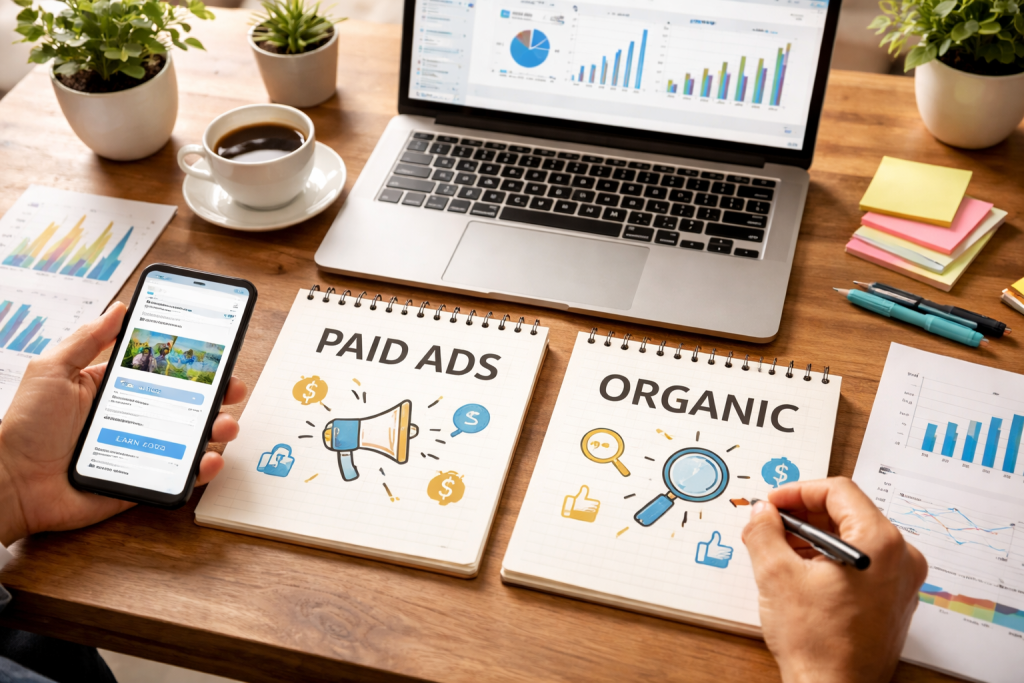
The fundamental distinction between paid advertising and organic strategies lies in the immediacy and control they offer. Paid ads, as the name suggests, require a monetary investment to gain visibility, while organic strategies rely on earning that visibility through content quality, search engine optimization (SEO), and authentic engagement.
Contents
- 1 The Nature of Paid Advertising
- 2 The Essence of Organic Strategies
- 3 Instant Visibility and Accelerated Reach
- 4 Precise Audience Targeting and Segmentation
- 5 Measurable Results and Data Insights
- 6 Ongoing Financial Investment and Budget Dependency
- 7 Ad Fatigue and Banner Blindness
- 8 Increased Competition and Rising Ad Costs
- 9 Long-Term Sustainable Traffic and ROI
- 10 Enhanced Brand Credibility and Authority
- 11 Improved User Experience and Brand Perception
- 12 Significant Time Investment for Results
- 13 Constant Adaptation to Algorithm Changes
- 14 High Competition for Organic Rankings
- 15 Leveraging Paid Ads to Boost Organic Efforts
- 16 Using Organic Insights to Refine Paid Campaigns
- 17 Creating a Holistic Marketing Ecosystem
- 18 Key Performance Indicators (KPIs) for Paid Ads
- 19 Essential Metrics for Organic Strategies
- 20 Attribution Modeling and Cross-Channel Analysis
The Nature of Paid Advertising
Paid advertising encompasses a broad spectrum of tactics, from search engine marketing (SEM) like Google Ads and social media advertising on platforms such as Facebook, Instagram, and LinkedIn to display ads, native advertising, and influencer marketing with a paid component. The core principle revolves around bidding for ad placements or paying for impressions, clicks, or conversions. This form of advertising allows businesses to bypass the organic ranking process and immediately appear at the top of search results or within social media feeds.
The Essence of Organic Strategies
websites; organic strategies, conversely, are about building a sustainable online presence over time. This includes creating high-quality, valuable content (blog posts, articles, videos, and infographics); optimizing that content for search engines to improve organic rankings; fostering genuine social media engagement; building backlinks from reputable websites; and managing online reputation through reviews and testimonials. The goal is to naturally attract an audience interested in your products or services, rather than paying for their attention.
Paid advertising, despite its financial commitment, offers distinct advantages, particularly in its ability to rapidly reach a highly specific audience. Businesses seeking immediate impact can greatly benefit from this precision.
Instant Visibility and Accelerated Reach
One of the most compelling benefits of paid ads is the ability to almost instantly gain visibility. Unlike organic strategies that can take months to show significant results, a well-executed paid campaign can put your brand in front of thousands, even millions, of potential customers within hours or days. This is particularly valuable for new businesses looking to make an immediate splash or for established businesses launching new products or promotions.
Precise Audience Targeting and Segmentation
gender, and paid advertising platforms offer sophisticated targeting capabilities that allow businesses to define their ideal customer with remarkable precision. Demographics (age, gender, and location), interests, behaviors, income levels, and even specific life events can be used to segment audiences. This means your marketing message is shown only to individuals who are most likely to be interested in your offerings, minimizing wasted ad spend and maximizing the potential for conversion. For instance, a luxury car brand can target high-income individuals in specific geographic areas with an interest in automotive-related content.
Measurable Results and Data Insights
Paid ad campaigns are inherently data-rich. Platforms provide comprehensive analytics on impressions, clicks, click-through rates (CTR), conversions, cost per click (CPC), and return on ad spend (ROAS). This wealth of data allows marketers to track the performance of their campaigns in real time, identify what’s working and what isn’t, and make immediate adjustments to optimize for better results. This continuous feedback loop is crucial for refining strategies and ensuring efficient budget allocations.
While the allure of immediate results and precise targeting is strong, paid advertising is not without its challenges. The financial investment and fierce competition are significant considerations that businesses must navigate strategically.
Ongoing Financial Investment and Budget Dependency
The most apparent drawback of paid ads is the continuous financial outlay they require. As soon as you stop paying, your visibility evaporates. This creates a dependency on an ongoing marketing budget, which can be a strain for small businesses or startups with limited resources. Furthermore, the cost per click or impression can fluctuate significantly based on industry, keyword competition, and ad quality, making budgeting a complex exercise.
Ad Fatigue and Banner Blindness
Consumers are constantly bombarded with advertisements, leading to a phenomenon known as “ad fatigue.” People become desensitized to ads, often subconsciously ignoring them. This “banner blindness” means that even well-targeted ads might fail to capture attention, reducing their effectiveness over time. To combat this, businesses must continuously refresh their ad creatives, experiment with different ad formats, and offer genuinely compelling value propositions.
Increased Competition and Rising Ad Costs
The effectiveness of paid advertising has led to its widespread adoption, resulting in a highly competitive landscape. As more businesses vie for the same ad space and target the same keywords, the cost of advertising tends to increase. This escalating competition can make it challenging for smaller businesses to compete with larger players who have deeper pockets, potentially pricing them out of certain lucrative ad placements or keywords.
Organic strategies, despite their slower pace, offer enduring benefits that contribute to long-term brand building, foster trust, and establish credibility in a way that paid ads often cannot.
Long-Term Sustainable Traffic and ROI
Unlike paid ads, the traffic generated through organic strategies, once established, is essentially “free.” A well-optimized piece of content can continue to attract visitors to your website for months or even years without any additional financial investment. This sustainable stream of traffic contributes to a strong return on investment (ROI) over the long haul, as the initial effort yields extended benefits.
Enhanced Brand Credibility and Authority
When your brand consistently appears at the top of search results for relevant queries, it naturally conveys authority and trustworthiness. Consumers often perceive organically ranked content as more credible and authoritative than paid advertisements. Delivering value and quality earns organic rankings, unlike simply paying for placement. By consistently providing helpful, informative, and engaging content, businesses can position themselves as thought leaders in their industry, building a loyal audience.
Improved User Experience and Brand Perception
Organic strategies often prioritize the user experience. Content marketing, for instance, focuses on providing valuable information that addresses user needs and pain points. This approach fosters a positive brand perception, as users appreciate the genuine effort to help them, rather than an overt sales pitch. A positive user experience encourages repeat visits and leads to word-of-mouth referrals, further strengthening brand reputation.
While the long-term rewards of organic strategies are significant, they demand considerable patience, consistent effort, and a deep understanding of evolving algorithms and user behavior.
Significant Time Investment for Results
One of the primary challenges of organic strategies is the time it takes to see substantial results. Search engine optimization (SEO), content marketing, and social media growth are not overnight successes. It can take several months, often six to twelve or even longer, to build enough authority and visibility to rank highly for competitive keywords. Businesses need to prepare for this extended timeline and maintain consistent effort throughout the process.
Constant Adaptation to Algorithm Changes
Search engine algorithms, particularly Google’s, are constantly evolving. What works for SEO today might be less effective tomorrow. This necessitates continuous learning, monitoring of industry trends, and adaptation of organic strategies. Businesses must stay abreast of algorithm updates, understand their implications, and be willing to adjust their content and technical SEO practices accordingly to maintain their rankings.
High Competition for Organic Rankings
Just as with paid ads, the competition for organic rankings is intense. For popular keywords, countless businesses are vying for those coveted top spots on search engine results pages (SERPs). Standing out requires not only high-quality content but also a robust backlink profile, strong technical SEO, and a deep understanding of user intent. This competition can make it challenging for new businesses or those entering saturated markets to quickly gain organic traction.
The most effective marketing strategies rarely rely on one approach exclusively. Instead, a synergistic integration of paid and organic methods often yields the best results, leveraging the strengths of each while mitigating their weaknesses.
Leveraging Paid Ads to Boost Organic Efforts
Paid ads can be instrumental in jumpstarting organic growth. For example, paid social media campaigns can drive traffic to newly published blog posts, increasing their initial visibility, generating shares, and attracting backlinks, all of which contribute to organic SEO. Similarly, using paid search to test keywords and ad copy can provide valuable insights that inform organic content creation and optimization, leading to more effective long-term SEO strategies.
Using Organic Insights to Refine Paid Campaigns
The data gleaned from organic efforts can be invaluable for optimizing paid campaigns. Analyzing the performance of organically ranking content can reveal which topics resonate most with your audience, which keywords drive the most qualified traffic, and what conversion points are most effective. These insights can then be applied to paid ad targeting, messaging, and landing page optimization, leading to more efficient ad spending and higher conversion rates.
Creating a Holistic Marketing Ecosystem
Ultimately, the goal is to create a holistic marketing ecosystem where paid and organic strategies complement and reinforce each other. Organic content builds trust and authority, while paid ads provide immediate reach and drive targeted traffic. This integrated approach ensures a consistent brand message across all channels, enhances brand recall, and guides customers seamlessly through their buying journey, from initial awareness to conversion and beyond.
Regardless of the chosen strategies, consistently measuring and analyzing performance is critical to understanding what’s working and identifying areas for improvement. Data-driven decision-making is the cornerstone of successful marketing.
Key Performance Indicators (KPIs) for Paid Ads
For paid advertising, key performance indicators (KPIs) include impressions, clicks, click-through rates (CTR), cost per click (CPC), conversion rates, cost per acquisition (CPA), and return on ad spend (ROAS). Regular monitoring of these metrics allows for real-time optimization, ensuring that campaigns are delivering against their objectives and providing a positive ROI. Tools like Google Analytics, Facebook Ads Manager, and LinkedIn Campaign Manager provide robust reporting capabilities.
Essential Metrics for Organic Strategies
Measuring organic success involves tracking metrics such as organic traffic volume, keyword rankings, bounce rate, time on page, pages per session, and conversion rates from organic channels. Tools like Google Search Console and Google Analytics are indispensable for tracking these KPIs, providing insights into how users are finding and interacting with your organic content. Monitoring backlink profiles and social media engagement also provides valuable context for organic performance.
Attribution Modeling and Cross-Channel Analysis
In a truly integrated marketing strategy, understanding attribution is crucial. Attribution modeling helps businesses understand which marketing touchpoints contribute to a conversion, rather than simply giving credit to the last interaction. By analyzing the entire customer journey across both paid and organic channels, businesses can gain a comprehensive understanding of the combined impact of their marketing efforts and make more informed decisions about resource allocation and future strategy development. This holistic view ensures that investments are being made in the most impactful areas, leading to sustained growth and profitability.

The Virelvo Editorial Team specializes in creating beginner-friendly digital marketing content designed to help individuals and small businesses grow online.