Navigating the modern marketing landscape can be a daunting task. Businesses are constantly seeking the most effective ways to reach their target audiences, build brand awareness, and ultimately drive sales. Two fundamental approaches dominate this conversation: inbound marketing and outbound marketing. Understanding their nuances, strengths, and weaknesses is crucial for any organization aiming for sustainable growth.
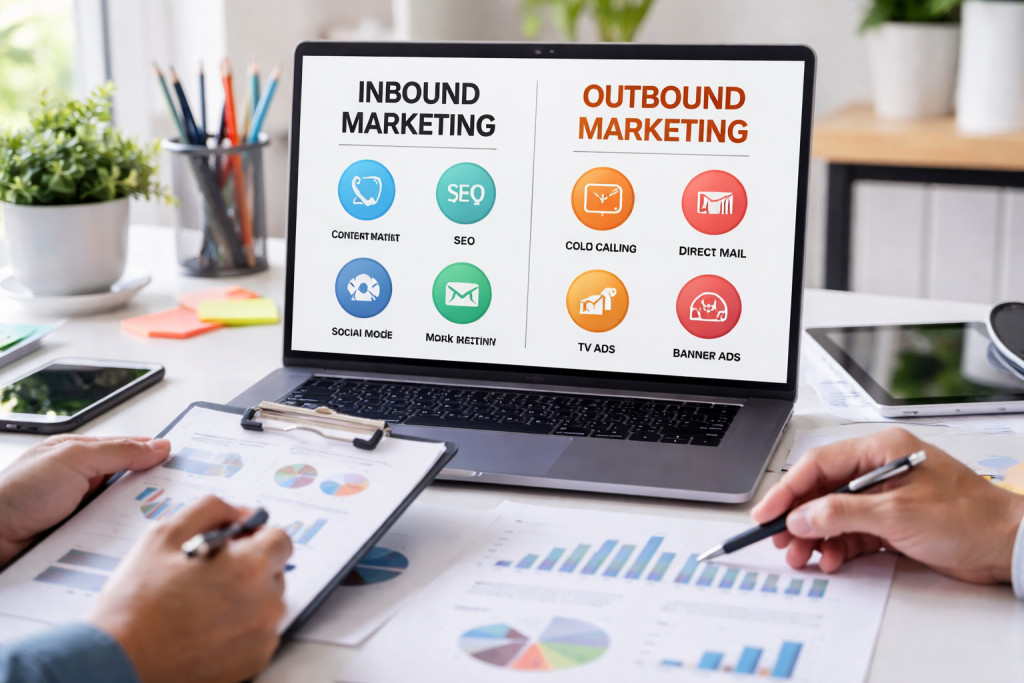
At its core, the distinction between inbound and outbound marketing lies in their approach to customer engagement. Inbound marketing is characterized by its customer-centric philosophy, focusing on attracting potential customers by creating valuable content and experiences tailored to their needs and interests. It’s about drawing people in, rather than pushing messages out. Think of it as making your business so interesting and helpful that people actively seek you out. This often involves publishing blog posts, creating informative videos, engaging on social media platforms, and optimizing website content for search engines. The goal is to build relationships and establish your brand as a trusted authority.
Outbound marketing, conversely, takes a more traditional, interruption-based approach. It involves proactively reaching out to a broad audience with promotional messages, often without prior consent or expressed interest. This can include television commercials, print advertisements, radio spots, cold calling, and direct mail. The fundamental idea is to broadcast your message widely, hoping to capture the attention of potential customers. While it can be effective for generating immediate awareness, its interruptive nature can sometimes be perceived as intrusive and may lead to lower engagement rates compared to inbound strategies.
Contents
- 1 The Philosophy Behind Each Approach
- 2 Key Characteristics and Tactics
- 3 Advantages of Inbound Marketing
- 4 Disadvantages of Inbound Marketing
- 5 Advantages of Outbound Marketing
- 6 Disadvantages of Outbound Marketing
- 7 Aligning Strategy with Business Goals
- 8 Understanding Your Target Audience and Their Journey
- 9 Assessing Resource Availability and Budget Constraints
- 10 Creating a Harmonious Marketing Ecosystem
- 11 Leveraging Outbound to Amplify Inbound Efforts
- 12 Using Inbound Insights to Refine Outbound Campaigns
- 13 Inbound Success Story: A SaaS Company’s Content Powerhouse
- 14 Outbound Impact: A Retailer’s Flash Sale Phenomenon
- 15 Integrated Symphony: A Financial Service’s Hybrid Approach
- 16 Evolving Consumer Expectations
- 17 The Rise of Data-Driven Personalization
- 18 A Converged Approach: The Best of Both Worlds
The Philosophy Behind Each Approach
The philosophical underpinnings of inbound and outbound marketing are starkly different. Inbound marketing operates on the principle of earning attention. It believes that by providing genuine value and solving problems for your target audience, you can build trust and loyalty. This approach promotes a community bond and encourages organic growth, as satisfied customers become brand advocates. It’s a long-term investment in building relationships and a sustainable marketing ecosystem.
Outbound marketing, on the other hand, is based on the principle of broadcast. It assumes that a well-placed advertisement or a direct sales pitch can persuade individuals to take action. While it can achieve quick wins and reach a large number of people, it often lacks the personalization and relational aspect that is increasingly valued by today’s consumers. The emphasis is on short-term effects rather than long-term involvement.
Key Characteristics and Tactics
The tactics employed by each strategy are a direct reflection of their underlying philosophies. Inbound marketing relies on methods such as content marketing (blogs, eBooks, and white papers), search engine optimisation (SEO), social media marketing, email marketing with opt-in subscribers, and influencer marketing. The emphasis is on creating assets that attract and educate.
Outbound marketing encompasses a range of tactics like paid advertising (TV, radio, print, online display ads), telemarketing, direct mail campaigns, trade shows, and unsolicited email blasts (spam). These are typically characterized by their one-way communication and their aim to interrupt the audience’s current activity.
Inbound marketing offers a compelling set of advantages for businesses looking to build a strong, sustainable presence in the digital age. Its primary strength lies in its ability to attract highly qualified leads who are actively searching for solutions that your business provides. These individuals, already engaged with your content, are more likely to respond positively to your offerings and become loyal customers. This organic attraction also tends to be more cost-effective in the long run, as the value of your content continues to deliver leads long after it’s created. Furthermore, inbound marketing builds brand authority and fosters trust, positioning your company as a thought leader in its industry. The result can lead to higher customer retention and a stronger brand reputation.
However, inbound marketing is not without its challenges. One of the most significant drawbacks is the time investment required. It takes considerable time and effort to build a robust content library, optimise for search engines, and nurture social media communities before significant results are visible. It’s a journey rather than a quick fix. The return on investment, while often substantial, may not be as immediate as with some outbound tactics. Measuring the direct ROI of individual inbound efforts can also be complex, requiring sophisticated analytics and tracking mechanisms. Additionally, the competitive landscape for online attention is fierce, meaning that creating truly compelling and differentiating content is essential to stand out.
Advantages of Inbound Marketing
The advantages of inbound marketing are numerous and impactful. It cultivates genuine customer relationships built on trust and value. This leads to higher conversion rates and a more engaged customer base. Moreover, inbound marketing strategies often result in a lower customer acquisition cost over time. It also enhances brand visibility and authority, making your business a go-to resource for potential customers. The content created can serve as evergreen assets, continuing to attract leads for months or even years.
Disadvantages of Inbound Marketing
Despite its strengths, inbound marketing presents certain disadvantages. The initial investment of time and resources can be substantial, with results often taking time to materialize. The competitive nature of online content means that significant effort is required to create truly impactful and unique materials. Measuring precise ROI can also be challenging. Furthermore, if not executed strategically, it can be difficult to gain immediate traction.
Outbound marketing, with its direct approach, can offer immediate visibility and reach a broad audience quickly. For businesses with a strong product or service and a clear understanding of their target demographic, outbound tactics can be effective in generating brand awareness and driving quick sales. It’s a way to put your message directly in front of as many eyes as possible. For certain industries or products, such as impulse buys or widely appealing consumer goods, interruption-based marketing can still be a powerful tool. Additionally, for companies with a significant budget, outbound marketing can offer a predictable and measurable way to reach a defined number of potential customers, making budget allocation more straightforward.
However, consumers often perceive outbound marketing as intrusive due to its lower engagement rate. The interruption it creates can lead to annoyance and negative brand perception. As consumers become more adept at blocking ads and filtering out unwanted communication, the effectiveness of traditional outbound methods is declining. The cost per lead can also be significantly higher than with inbound strategies, especially for businesses without a substantial marketing budget. It can also be challenging to target specific segments of an audience effectively, leading to wasted marketing spend on individuals who are unlikely to convert.
Advantages of Outbound Marketing
The advantages of outbound marketing include its ability to generate immediate results and broad brand awareness. It can be effective for reaching a large, diverse audience quickly. For certain products or services, a direct sales approach can yield rapid conversions. The predictability of some outbound channels allows for clearer budget planning and measurement of reach.
Disadvantages of Outbound Marketing
The disadvantages of outbound marketing are significant in today’s consumer landscape. It is often perceived as intrusive, leading to a lower engagement rate and potential negative brand sentiment. The cost per lead can be high, and targeting specificity can be a challenge, resulting in wasted marketing efforts. Furthermore, consumers are increasingly employing ad-blocking technologies, diminishing the impact of many outbound tactics.
Selecting the optimal marketing strategy hinges on a deep understanding of your business objectives, your target audience, and your available resources. The decision is not universally applicable. If your goal is to build long-term brand loyalty, establish yourself as an industry leader, and attract highly qualified leads who are actively seeking solutions, an inbound approach is likely to be more beneficial. This is particularly true for businesses operating in complex industries or selling products/services that require education and consideration.
Conversely, if your primary objective is rapid brand awareness, immediate sales for a widely appealing product, or reaching a broad, less segmented audience quickly, outbound marketing might be a more suitable starting point, although its effectiveness relative to cost should be carefully evaluated. Consider your budget; inbound marketing often requires a greater upfront investment of time and human resources, while outbound marketing may require a larger upfront financial investment for advertising space or direct outreach. Understanding your customer journey is also paramount. Where do your potential customers spend their time? How do they seek information? The answers to these questions will guide your strategic choices.
Aligning Strategy with Business Goals
The first step in determining the right strategy is to clearly define your business goals. Are you aiming for lead generation, brand awareness, customer retention, or a combination of these? If lead generation is paramount and you value quality over quantity, inbound marketing’s focus on attracting interested individuals aligns well. Consider a targeted outbound campaign if your priority is immediate sales and broad household name recognition.
Understanding Your Target Audience and Their Journey
Deeply understanding your ideal customer is non-negotiable. Where do they gather information? What are their pain points and aspirations? How do they make purchasing decisions? Inbound marketing thrives on meeting customers where they are, providing solutions to their problems through valuable content. Outbound marketing aims to interrupt them with a message it believes will resonate. Researching your audience’s media consumption habits and their receptiveness to various communication styles will be a crucial factor.
Assessing Resource Availability and Budget Constraints
Both inbound and outbound marketing require resources, but the nature of those resources differs. Inbound marketing demands content creation expertise, SEO knowledge, social media management skills, and a commitment to long-term nurturing. Outbound marketing, especially traditional forms like television advertising or direct mail, often requires a significant financial outlay for media placements and production. Evaluating your team’s existing skills and your financial capacity will heavily influence your strategic direction.
The most effective marketing strategies often strike a balance, integrating both inbound and outbound tactics to create a cohesive and powerful approach. This dual strategy leverages the strengths of each while mitigating their weaknesses. For instance, outbound marketing can be used to drive traffic to valuable inbound content. A targeted social media ad promoting a new eBook, or a radio spot directing listeners to your website’s blog, effectively bridges the gap. Simultaneously, inbound efforts can fuel outbound campaigns. Insights gained from SEO performance and social media engagement can inform the messaging and targeting of outbound advertisements, making them more relevant and impactful.
This integrated approach creates a consistent brand experience across multiple touchpoints, reinforcing your message and increasing the likelihood of conversion. It’s about creating a unified ecosystem where different marketing efforts complement and amplify one another. The goal is not to choose between inbound and outbound, but rather to discern how they can work together synergistically to achieve your overarching business objectives.
Creating a Harmonious Marketing Ecosystem
The concept of integration is about ensuring that your marketing efforts work in concert. Instead of operating in silos, inbound and outbound tactics should be designed to complement each other. This means that the messaging and branding should be consistent across all channels. An integrated approach ensures that a customer who encounters your brand through an outbound advertisement receives a similar, reinforcing message when they engage with your inbound content.
Leveraging Outbound to Amplify Inbound Efforts
Outbound marketing can serve as a powerful accelerator for your inbound initiatives. Imagine running a targeted social media advertising campaign that promotes your latest blog post or a downloadable guide. This pushes your valuable content into the feeds of a wider, relevant audience, driving traffic back to your website and increasing the reach of your inbound efforts. Similarly, direct mail campaigns can be used to invite recipients to a webinar or to download a resource from your website.
Using Inbound Insights to Refine Outbound Campaigns
The data and insights generated by inbound marketing can be invaluable for optimizing outbound campaigns. By analyzing which content resonates most with your audience, which keywords drive traffic, and which social media platforms yield the highest engagement, you can learn more about your target customer’s preferences. This information can then be used to craft more targeted and effective outbound messages, improving the relevance and ROI of your paid advertising or direct outreach efforts.
Many businesses have achieved remarkable success by strategically employing either inbound or outbound marketing, or a compelling integration of both. Consider the example of a B2B software company that, struggling with lead generation, shifted its focus to inbound marketing. By developing a comprehensive blog with in-depth articles addressing common industry challenges, creating valuable white papers, and optimising its website for relevant search terms, the company saw a significant increase in organic traffic and a dramatic improvement in lead quality. Potential clients were actively seeking their expertise, leading to more qualified sales conversations and ultimately, a higher conversion rate.
On the other hand, a consumer packaged goods (CPG) company launching a new snack product might find significant success with a combination of outbound and inbound strategies. An initial widespread television advertising campaign could generate broad awareness and initial trial. This type of marketing could then be complemented by social media campaigns showcasing creative recipes and user-generated content (inbound) that reinforces the product’s appeal and encourages repeat purchases.
Inbound Success Story: A SaaS Company’s Content Powerhouse
A hypothetical SaaS company, “InnovateSolutions,” faced stagnant growth. They implemented an inbound strategy by creating high-quality blog posts answering common customer pain points, publishing detailed case studies showcasing their product’s benefits, and developing an informative podcast series. This resulted in a significant surge in organic search traffic, higher website engagement, and a substantial increase in qualified leads who were already educated about their offerings. Their sales team found that prospects were further along the buyer’s journey, making closing deals more efficient.
Outbound Impact: A Retailer’s Flash Sale Phenomenon
Imagine a national clothing retailer, “StyleHub,” facing declining foot traffic. They decided to leverage outbound marketing by implementing a series of aggressive, time-limited flash sales announced through targeted email blasts to their customer database and paid social media advertisements showcasing significant discounts. This strategy, while interruption-based, generated immediate buzz and drove a substantial surge in both online and in-store traffic, leading to a significant increase in sales over short periods, effectively clearing inventory and re-engaging customers.
Integrated Symphony: A Financial Service’s Hybrid Approach
Consider a financial services firm, “Prosperity Partners,” that recognized the need for both reach and credibility. They utilized outbound television commercials to build broad brand recognition and trust in their established name. Simultaneously, they invested heavily in inbound marketing, creating a comprehensive website with resources like financial planning guides, retirement calculators, and expert blog posts. Their outbound ads encouraged viewers to visit their website for more personalized advice, effectively funneling interested audiences into their inbound ecosystem to build richer relationships and generate qualified leads for their advisors.
The future of marketing is not a simple “inbound versus outbound” dichotomy. Instead, it’s increasingly about intelligent integration and a keen understanding of evolving consumer behavior. As digital natives become the dominant consumer group, their preference for value-driven, non-intrusive engagement will continue to grow, solidifying the importance of inbound marketing principles. Personalization, hyper-targeting, and data-driven insights will become even more critical. Outbound marketing will likely not disappear, but its form will inevitably change. It will need to become more sophisticated, offering genuine value rather than simply pushing messages. Think of highly personalized, relevant outbound outreach informed by deep customer data, or outbound efforts that drive users to rich, engaging inbound experiences.
Ultimately, the businesses that thrive will be those that can master the art of attracting, engaging, and delighting their audiences through a strategic blend of proactive outreach and valuable, organic connections. The strategies that adapt to the evolving expectations of the modern consumer, prioritising genuine relationships and demonstrable value above all else, will be the most successful.
Evolving Consumer Expectations
The modern consumer is more informed, empowered, and less tolerant of unsolicited interruptions. They actively search for solutions and information at their own speed. This shift inherently favors inbound marketing’s philosophy of providing value and attracting customers through helpful content. As technology advances, consumers gain more control over the messages they receive, making interruptive outbound tactics less effective unless they are relevant and personalized.
The Rise of Data-Driven Personalization
Data will play a deep role in shaping the future of marketing. The intelligent use of customer data will optimise both inbound and outbound strategies to deliver hyper-personalized experiences. This means outbound messages will be far more targeted and relevant, based on a deep understanding of individual preferences and behaviors. Inbound content will also be tailored to specific audience segments, ensuring maximum impact.
A Converged Approach: The Best of Both Worlds
It’s unlikely that either inbound or outbound marketing will become obsolete. Instead, the future lies in their convergence. Businesses will leverage outbound tactics to drive traffic to valuable inbound assets and utilise inbound insights to refine and personalise their outbound outreach. This creates a seamless and effective marketing engine that caters to the modern consumer’s desire for both convenience and authenticity. The ultimate goal is to build lasting relationships and deliver exceptional customer experiences, regardless of the specific channel employed.

The Virelvo Editorial Team specializes in creating beginner-friendly digital marketing content designed to help individuals and small businesses grow online.