In today’s digital landscape, the success of a small business often hinges on its ability to connect with local customers online. Effective local SEO forges that connection for many. It’s more than just having a website; it’s about being found precisely when potential customers in your immediate vicinity are searching for the products or services you offer. Ignoring local SEO is akin to opening a quaint brick-and-mortar shop on a bustling street but hiding its entrance behind a dense hedge—customers might know you exist, but they can’t find their way in.
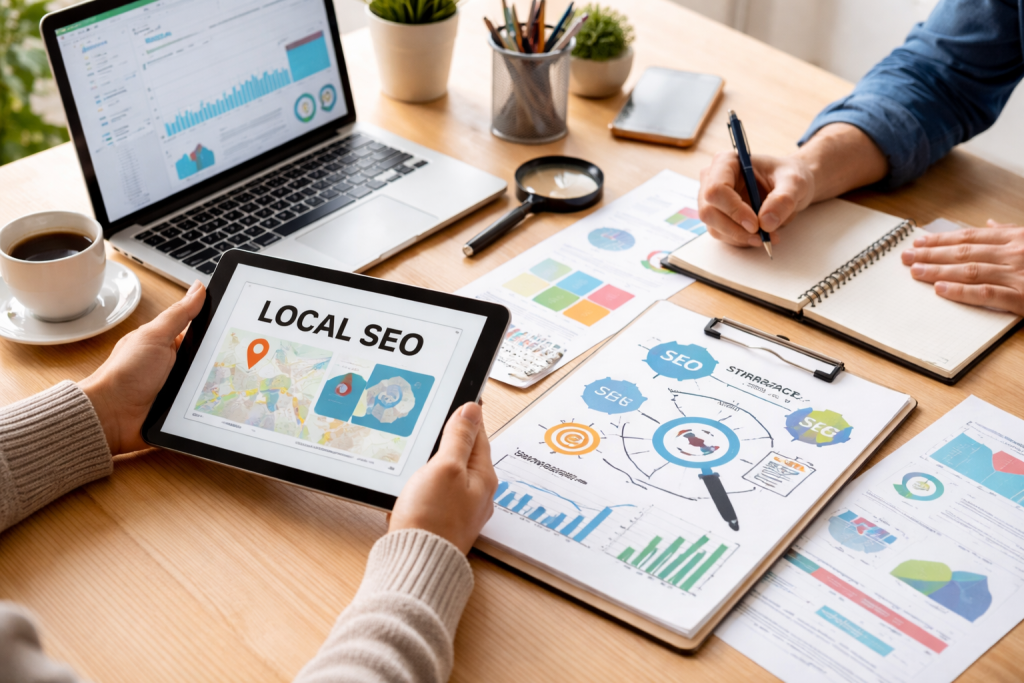
The pervasive use of smartphones and location-based search has fundamentally altered consumer behavior. People are no longer just looking for a “coffee shop”; they’re looking for a “coffee shop near me” or a “coffee shop in [their specific town].” This shift presents a tremendous opportunity for small businesses to dominate their local market. By understanding and implementing robust local SEO strategies, even the smallest enterprise can compete effectively with larger, more established players, ensuring their brand appears prominently in local search results and driving crucial foot traffic and online inquiries.
For small businesses, local SEO isn’t just an option; it’s a necessity. Unlike national or international brands that target a broad audience, small businesses thrive on serving a specific geographic area. Their customer base is intrinsically tied to their physical location.
Contents
- 1 Bridging the Gap Between Online Search and Offline Visits
- 2 Enhanced Visibility and Targeted Traffic
- 3 Building Trust and Credibility within the Community
- 4 Geographic Relevance and Keyword Optimization
- 5 Consistent NAP Information Across All Platforms
- 6 Mobile-Friendliness and Website Performance
- 7 Optimizing Your GMB Profile for Maximum Impact
- 8 Utilizing GMB Posts, Products, and Services
- 9 Responding to Questions and Engaging with Your Audience
- 10 Creating Localized Landing Pages and Service Pages
- 11 Localized Blog Content and Neighborhood Guides
- 12 Schema Markup for Local Business Information
- 13 Maximizing Presence on Local Business Directories
- 14 Generating Local Reviews and Testimonials
- 15 Acquiring Geographically Relevant Backlinks
- 16 Strategies for Soliciting and Managing Reviews
- 17 Responding to All Reviews and Engaging Positively
- 18 Utilizing Google My Business Insights
- 19 Monitoring Website Traffic and Local Search Rankings
- 20 Tracking Conversions from Local Efforts
Bridging the Gap Between Online Search and Offline Visits
Imagine a situation where a local resident urgently needs a plumber’s services or wants to dine at a restaurant. In these scenarios, an immediate need and a strong inclination to visit a physical establishment often accompany the search. Local SEO acts as the bridge connecting that online search query with a real-world visit, decision, and ultimately, a transaction. It guarantees that your business is visible and presented as a convenient and reliable option when someone in your service area is looking for what you offer. This direct conversion from search to visit is a cornerstone of small business growth.
Enhanced Visibility and Targeted Traffic
When your local SEO is optimized, your business appears in highly coveted positions: the “local pack” (the map-based results at the top of a Google search page) and organic local search results. This elevated visibility is invaluable. It’s not just about more traffic; it’s about targeted traffic. These are individuals who are already geographically qualified and actively seeking your type of business. They have a higher intent to purchase or engage, making them far more valuable leads than someone performing a general search far outside your operational zone. This precision targeting maximizes your marketing efforts and budget.
Building Trust and Credibility within the Community
Appearing consistently in local search results, especially with positive reviews, establishes your business as a trusted entity within the community. When Google, a recognized authority, recommends your business, it imparts a sense of credibility. Potential customers see that others have had positive experiences, further reinforcing their decision to choose your services. This local trust translates into repeat business and powerful word-of-mouth referrals, the lifeblood of many small enterprises.
Achieving local SEO success isn’t a singular effort but rather a strategic combination of several critical elements. Each component plays a vital role in signaling to search engines that your business is relevant and authoritative for local searches.
Geographic Relevance and Keyword Optimization
At the core of local SEO is demonstrating geographic relevance. This involves strategically incorporating location-specific keywords throughout your website content, meta descriptions, and Google My Business profile. Think beyond just your city; consider neighborhoods, districts, or even prominent local landmarks. For instance, a bakery in Brooklyn should not only optimize for “bakery Brooklyn” but also “bakery Dumbo” or “artisan bread Williamsburg.” This granular approach helps search engines understand precisely where your business operates and for which areas you are most relevant.
Consistent NAP Information Across All Platforms
NAP stands for Name, Address, and Phone Number. This information must be absolutely consistent across every online platform where your business is listed—your website, Google My Business, Yelp, Facebook, and any online directories. Even minor discrepancies, like an abbreviation for “Street” in one place and “St.” in another, can confuse search engine algorithms and negatively impact your local ranking. This consistency signals accuracy and legitimacy to search engines, reinforcing your business’s identity and physical presence.
Mobile-Friendliness and Website Performance
Given that a significant portion of local searches occur on mobile devices, having a responsive, mobile-friendly website is non-negotiable. Google prioritizes mobile-optimized sites in its rankings, ensuring users have a seamless experience regardless of their device. Beyond responsiveness, website loading speed and overall performance are crucial. Slow-loading pages frustrate users and lead to higher bounce rates, signaling a poor user experience to search engines. A fast, fluid mobile experience is paramount for converting local searchers into customers.
Google My Business (GMB) is arguably the single most important tool for small businesses aiming to dominate local search. It is the central hub for your business’s online presence within Google’s ecosystem.
Optimizing Your GMB Profile for Maximum Impact
Claiming and thoroughly optimizing your GMB profile is the foundational step. This goes far beyond just filling in your basic NAP information. You need to select the most accurate categories for your business, write a compelling business description incorporating relevant keywords, and meticulously list your hours of operation, payment methods, and services offered. The more comprehensive and accurate your profile, the better Google can understand and present your business to relevant searchers. High-quality photos and videos also play a crucial role in attracting attention and showcasing your establishment.
Utilizing GMB Posts, Products, and Services
GMB is not a static directory listing; it’s a dynamic communication platform. Regularly publishing GMB Posts about specials, events, new products, or important updates keeps your profile fresh and engaging. This activity signals to Google that your business is active and providing valuable information. Similarly, utilizing the “Products” and “Services” sections allows you to detail your offerings with rich descriptions, prices, and images, further enhancing your visibility for specific search terms and directly answering potential customer questions within the search results themselves.
Responding to Questions and Engaging with Your Audience
GMB includes a Q&A section where customers can ask questions directly about your business. Actively monitoring and responding to these questions not only provides valuable information to potential customers but also demonstrates your attentiveness and commitment to customer service. Engaging with your audience on GMB creates a more interactive and informative profile, giving searchers more reasons to choose your business.
While GMB is central, your website remains a crucial asset for local SEO, providing a richer context for search engines and potential customers.
Creating Localized Landing Pages and Service Pages
For businesses serving multiple locations or offering distinct services in different geographic areas, creating dedicated localized landing pages or service pages is highly effective. Each page should be optimized for a specific location and service, incorporating relevant local keywords, testimonials from local customers, and hyper-local content that resonates with residents of that area. This deep localization signals to Google that you have specific relevance for searches related to those locations and services.
Localized Blog Content and Neighborhood Guides
Beyond service pages, creating blog content that directly addresses local topics can significantly enhance your local SEO. Think about “Best Coffee Shops in [Your Neighborhood],” “Guide to Local Parks in [Your City],” or “Tips for Homeowners in [Your Town].” This type of content not only attracts local searchers interested in community information but also provides Google with more contextual clues about your geographic relevance. It positions your business as a local expert and resource.
Schema Markup for Local Business Information
Schema markup, a type of microdata, helps search engines better understand the information on your website. Implementing LocalBusiness schema markup on your contact page or homepage provides structured data about your business name, address, phone number, hours, and other key details. This structured data can lead to richer search results listings (rich snippets), making your business stand out more prominently in local search and potentially improving click-through rates.
Citations and local links are fundamental pillars of local SEO, validating your business’s existence and authority within its geographic area.
Maximizing Presence on Local Business Directories
A citation is any online mention of your business’s NAP information. Being listed on numerous authoritative local business directories—think Yelp, Yellow Pages, industry-specific directories, and even local chamber of commerce websites—strengthens your local SEO. The sheer volume and quality of these citations signal to search engines that your business is legitimate and active in the local community. Ensure complete NAP consistency across all these listings.
Generating Local Reviews and Testimonials
Reviews are an immensely powerful local SEO signal. Search engines interpret consistent positive reviews as a sign of a trustworthy and reputable business. Actively encouraging customers to leave reviews on Google My Business, Yelp, and other relevant platforms is crucial. Furthermore, incorporating prominent testimonials and case studies from local customers directly onto your website adds another layer of credibility and provides valuable local keyword context.
Acquiring Geographically Relevant Backlinks
Backlinks from other reputable websites are a strong ranking factor in general SEO, and the same holds true for local SEO. Earning backlinks from other local businesses, community organizations, local news sites, or bloggers within your service area sends powerful signals to search engines about your local authority and relevance. This can be achieved through local partnerships, sponsoring local events, or offering your expertise as a guest blogger on a local resource site.
Online reviews are not merely social proof; they are a critical component of local SEO, directly influencing your visibility and customer perception.
Strategies for Soliciting and Managing Reviews
Proactively asking for reviews is essential. This can be done through polite requests at the point of sale, follow-up emails after a service, or even via signage in your physical location. Make the review process easy and accessible for your customers by providing direct links to your Google My Business profile or other review platforms. Equally important is managing these reviews: responding to all reviews, both positive and negative, demonstrates your commitment to customer satisfaction and service recovery.
Responding to All Reviews and Engaging Positively
Your responses to reviews are public and reflect on your brand. Always thank customers for positive feedback. For negative reviews, acknowledge the issue, apologize sincerely, and ideally, offer a solution or invite them to contact you privately to resolve the matter. A thoughtful and professional response to negative feedback can often mitigate its impact and even turn a dissatisfied customer into a loyal one, showcasing your commitment to resolving issues. This engagement also signals to search engines that you are an attentive business owner.
Effective local SEO is an ongoing process, requiring continuous monitoring and adaptation to ensure sustained success.
Utilizing Google My Business Insights
Google My Business provides a wealth of analytical data through its “Insights” section. Here, you can track how customers are finding your business (e.g., direct searches, discovery searches), where they are seeing your business on Google (e.g., search or maps), the actions they take (website visits, phone calls, direction requests), and even photo views. Regularly analyzing these insights helps you understand what’s working and identify areas for improvement in your GMB optimization.
Monitoring Website Traffic and Local Search Rankings
Beyond GMB, use tools like Google Analytics to track organic traffic to your website, paying close attention to traffic originating from local searches. Monitor specific keyword rankings for your target local terms using SEO tools. Observing which keywords are driving traffic and conversions can inform your content strategy and highlight opportunities for further optimization. A clear upward trend in local search visibility and website traffic is a strong indicator of successful local SEO efforts.
Tracking Conversions from Local Efforts
Ultimately, the goal of local SEO is to drive business. Track conversions that can be attributed to your local SEO efforts. This might include phone calls initiated from your GMB profile, direction requests that lead to store visits, online form submissions from local customers, or actual sales that can be traced back to local search. By establishing clear conversion goals and tracking them diligently, small businesses can truly measure the return on investment of their local SEO strategies, ensuring their efforts are directly contributing to their bottom line and cementing their place in the local market.

The Virelvo Editorial Team specializes in creating beginner-friendly digital marketing content designed to help individuals and small businesses grow online.